The Coffee Belt Explained
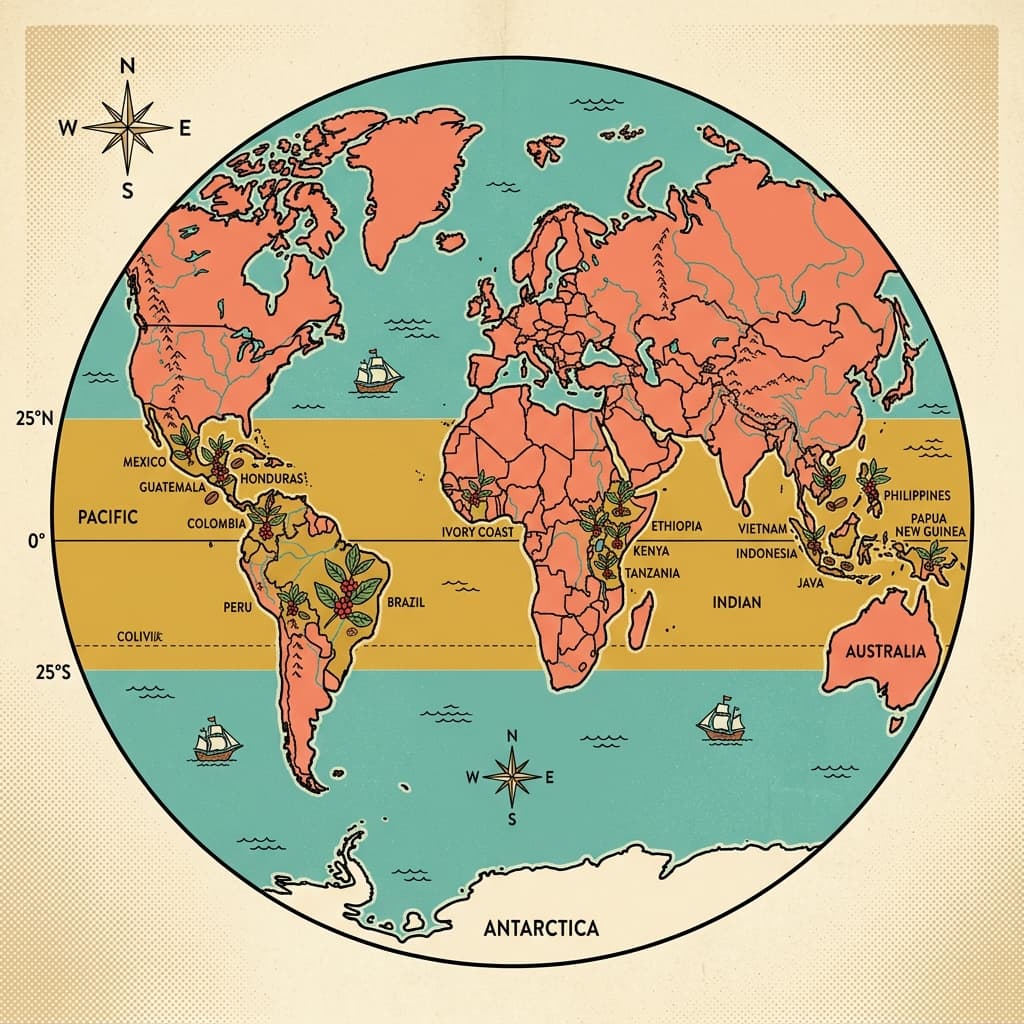
The Tropical Zone of Coffee
The Coffee Belt — also known as the Bean Belt — is a horizontal band that wraps around the Earth between the Tropics of Cancer and Capricorn, roughly between latitudes 25°N and 30°S. This is where virtually all of the world's commercial coffee is grown.
Over 70 countries within the Coffee Belt produce coffee, but just five — Brazil, Vietnam, Colombia, Indonesia, and Ethiopia — account for over 65% of global production.
Why This Zone?
Coffee plants are remarkably sensitive to their environment. They require a specific combination of conditions that the tropical zone uniquely provides:
Ideal growing conditions:
- Temperature: 15-24°C (60-75°F) — consistent, without frost
- Rainfall: 1,500-2,000mm per year with a distinct dry season for harvesting
- Altitude: 800-2,200 meters above sea level (for Arabica)
- Soil: Rich, volcanic, well-draining soil with a slightly acidic pH (6.0-6.5)
- Shade: Partial shade from taller canopy trees protects plants from intense sun
- Humidity: Moderate to high humidity (60-70%)
The Three Major Growing Regions
The Coffee Belt is generally divided into three major producing regions, each with distinctive flavor characteristics shaped by their unique terroir:
1. Africa & Arabia
The birthplace of coffee. Ethiopian coffees are famous for their incredible diversity — from the blueberry bombs of Sidama to the jasmine-scented Yirgacheffes. Kenyan coffees are known for their bright acidity and blackcurrant notes. Yemen produces rare, wine-like coffees with deep, complex flavors.
Ethiopia alone has over 10,000 heritage varieties of coffee — more genetic diversity than the rest of the world combined. Many of these varieties haven't even been catalogued yet.
2. Central & South America
The backbone of commercial coffee. Brazil dominates global production with its massive fazendas (estates). Colombia is synonymous with well-balanced, caramel-sweet coffees. Guatemala, Costa Rica, and Panama produce exceptional specialty-grade coffees that regularly win international competitions.
3. Asia & Pacific
A diverse and rapidly evolving region. Indonesia (Sumatra, Java, Sulawesi) is known for earthy, full-bodied coffees. Vietnam is the world's largest producer of Robusta. India produces unique monsoon-processed coffees. And countries like Myanmar and China are emerging as exciting new origins.
Altitude is the single most important factor in coffee quality. Higher altitude means cooler temperatures, which slows cherry maturation and allows more complex sugars and acids to develop — resulting in more nuanced flavors.