SCA Cupping Protocol
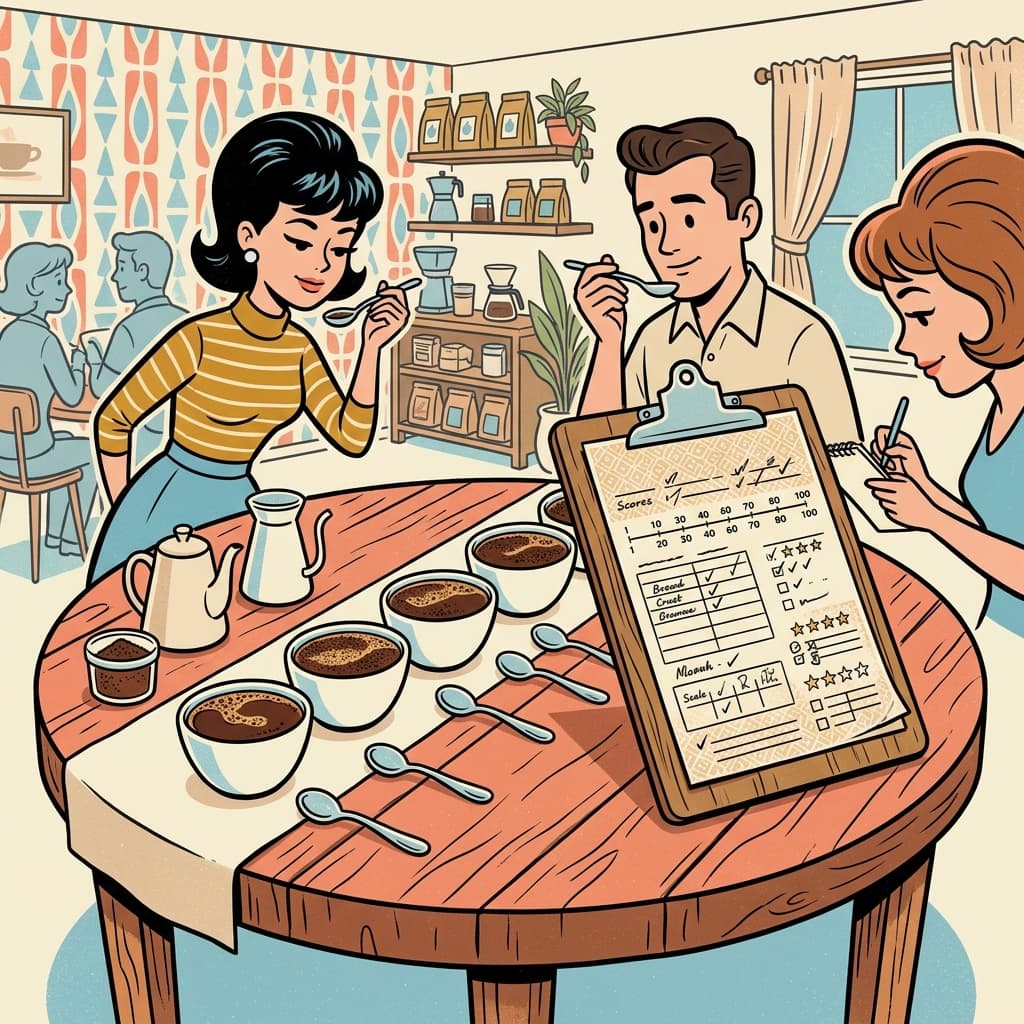
The Universal Language of Coffee Quality
Cupping is specialty coffee's universal evaluation method. No matter where you are in the world — Bogotá, Tokyo, Melbourne, Oslo — the SCA Cupping Protocol is the same. It's how green buyers evaluate lots, roasters check quality, baristas calibrate milk-based drinks, and competition judges assess excellence.
Why Cupping, Not Just Tasting?
Cupping is different from casual tasting. It's a controlled, standardized method designed to eliminate variables so that only the coffee's inherent quality comes through. By standardizing ratio, grind, water temperature, and contact time, you ensure that differences between cups are due to the COFFEE, not the brewing.
SCA Cupping Standards:
- Ratio: 8.25g coffee per 150ml water (1:18.18)
- Grind: Medium-coarse, slightly coarser than typical drip. ~850-1000 micron particle size.
- Water: 93°C (200°F), fresh, off the boil. SCA water standard (150ppm TDS).
- Steep Time: 4 minutes before breaking the crust.
- Cups: At least 5 cups per sample to detect random defects (like the potato defect).
- Bowls: Standard 7-9oz ceramic cupping bowls. Must be identical and pre-warmed.
- Spoons: Deep, round cupping spoons. Used for slurping, not stirring.
The reason cupping uses 5 cups per sample is statistical: a single defective bean (like a quaker or potato defect) affects only one cup. With 5 cups, you can identify whether an off-note is systematic (appears in all 5 = a problem with the whole lot) or random (appears in 1 = a random defect).
The Cupping Sequence
Step-by-step protocol:
- 1. Dry Fragrance — Grind the coffee. Immediately smell the dry grounds. Note the intensity and quality of the aroma.
- 2. Wet Aroma — Pour 93°C water over the grounds. A "crust" of grounds forms on top, trapping volatile aromatics.
- 3. Wait 4 minutes — The coffee steeps. Grounds continue to extract. Do not touch or disturb the crust.
- 4. Break the Crust — Using a cupping spoon, push the crust from front to back while lowering your nose to the cup. This is the most aromatic moment — breathe deeply.
- 5. Clean — Use two spoons to remove floating grounds and foam from the surface. The cup should be clear.
- 6. Aspire — Beginning at ~70°C, slurp vigorously from the spoon. The coffee should spray across your entire palate.
- 7. Evaluate — Score each attribute as you taste. Re-taste as the coffee cools — flavors evolve dramatically from 70°C to 37°C.
- 8. Score — Record final scores on the SCA cupping form.
Breaking the crust is the single most informative moment in cupping. In those 2-3 seconds, you get a concentrated burst of every aromatic compound the coffee has to offer. Master the crust break, and you're halfway to mastering cupping.