The Maillard Reaction
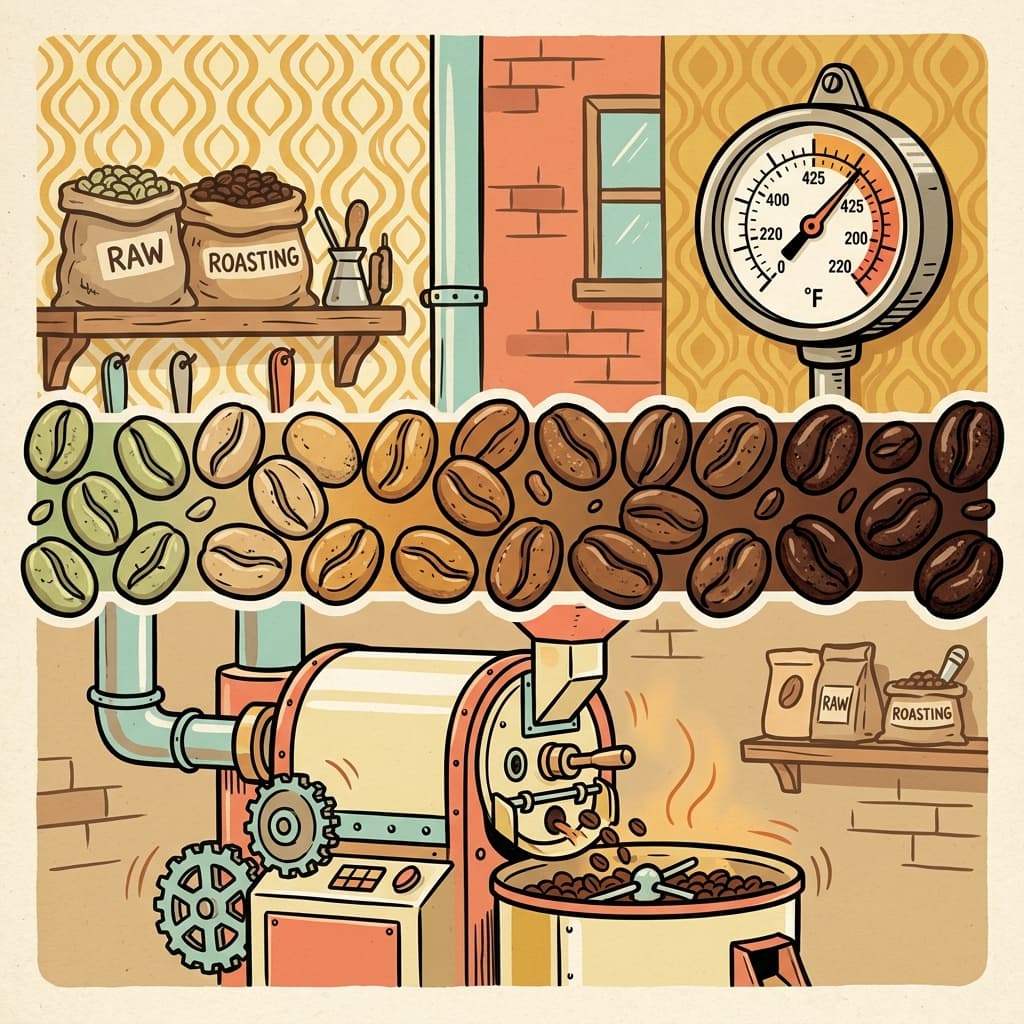
The Chemistry That Makes Coffee Delicious
The Maillard reaction is the single most important chemical process in coffee roasting. Named after French chemist Louis-Camille Maillard, it's the same reaction that browns bread, sears steak, and gives caramel its color. In coffee, it's responsible for the vast majority of flavor and aroma development.
What Happens Chemically
At its core, the Maillard reaction is an interaction between amino acids (proteins) and reducing sugars when exposed to heat. Starting at around 150°C (302°F), these compounds begin recombining into hundreds of new molecules — melanoidins (brown pigments), furanones (caramel aromas), pyrazines (nutty, roasted aromas), and many more.
Key temperatures in roasting:
- ~100°C (212°F) — Drying Phase. Green beans lose moisture. Beans turn from green to pale yellow.
- ~150°C (302°F) — Maillard Reaction begins. Beans turn tan/brown. Sugar browning starts.
- ~170°C (340°F) — Caramelization begins. Sugars decompose into caramel compounds. Sweetness develops.
- ~196°C (385°F) — First Crack. Internal pressure causes beans to crack audibly. City roast territory.
- ~224°C (435°F) — Second Crack. Cell structure begins to fracture. Oils migrate to surface. Dark roast territory.
- ~240°C+ (464°F+) — Danger zone. Carbon dominates. Smoky, ashy, bitter.
Coffee contains over 1,000 volatile aroma compounds — more than wine (~200) or chocolate (~600). Most of these are created during the Maillard reaction, which is why roasting is often called the most flavor-impactful step in the entire chain from seed to cup.
Why Roasters Obsess Over Rate of Rise
The speed at which temperature increases — called the Rate of Rise (RoR) — determines which reactions dominate. A fast RoR emphasizes brightness and acidity; a slow RoR develops more body and sweetness. Roasters track this second-by-second using profiling software.
Roasting isn't just about reaching a target color or temperature — it's about the journey. Two coffees can end at the same final temperature but taste completely different based on how they got there.