First Crack & Second Crack
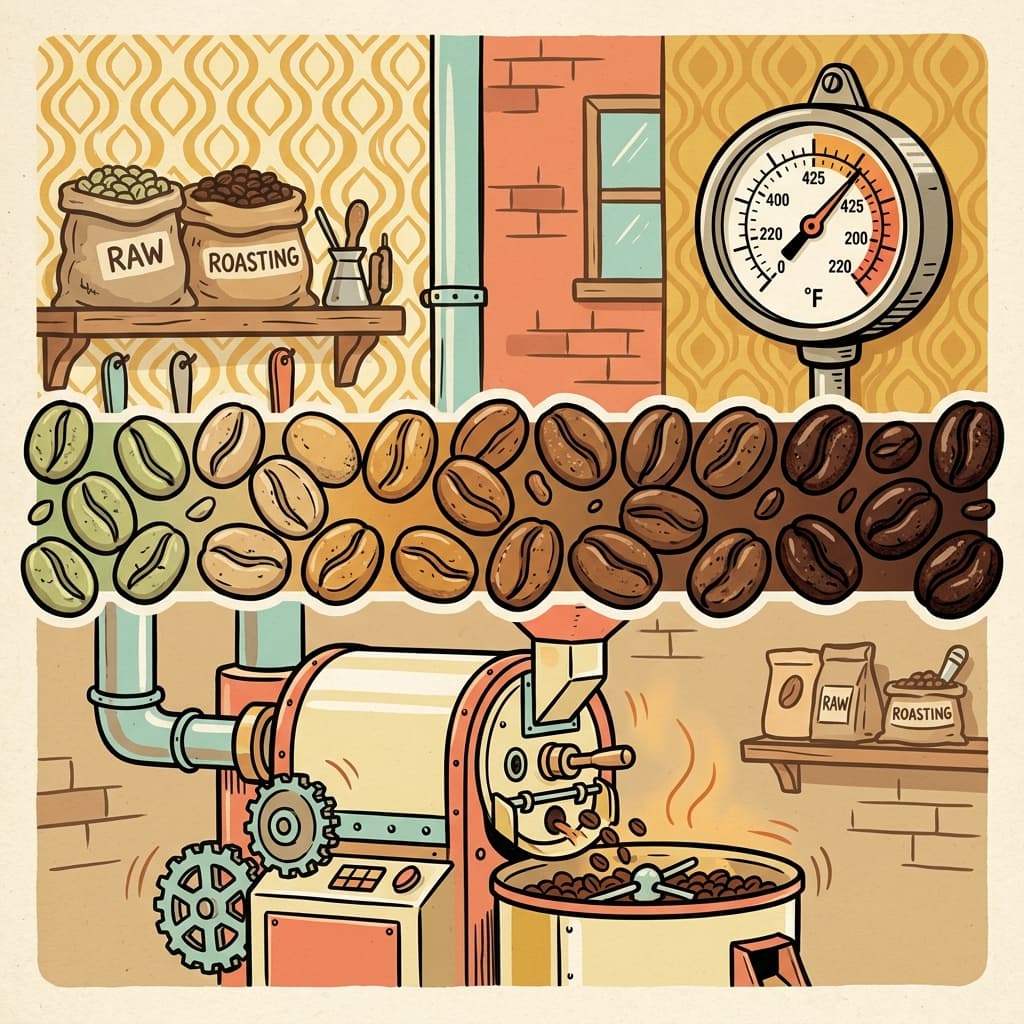
The Two Defining Moments of Every Roast
If the Maillard reaction is the roast's symphony, first and second crack are its crescendos. These audible, physical events inside the bean are the roaster's most important signposts — they tell you exactly where you are in the roasting process.
First Crack (~196°C / 385°F)
As beans approach 196°C, the moisture inside them turns to steam, and CO₂ accumulates from chemical reactions. Eventually, the internal pressure exceeds the bean's structural strength, causing an audible POP — similar to popcorn. This is first crack.
What first crack tells us:
- The bean has undergone sufficient chemical development to be considered "drinkable"
- Light roast territory begins — City Roast is just after first crack finishes
- The bean expands 50-100% in volume but loses ~12-20% of its weight (water loss)
- Acidity is at its peak; sweetness is developing; body is still light
- Origin characteristics are most prominent at this stage
Specialty roasters generally aim to "develop" the coffee for 15-25% of total roast time AFTER first crack begins. This "development time ratio" balances acidity with sweetness and body. Too short = sour, grassy, underdeveloped. Too long = flat, baked, muted flavors.
Second Crack (~224°C / 435°F)
If you continue roasting beyond first crack, you'll eventually hear a second round of cracks — second crack. These are quieter, more rapid, and sound like rice crispies snapping. This is the cell structure itself fracturing.
What second crack indicates:
- Oils begin migrating to the bean's surface (the shiny look of dark roasts)
- Origin characteristics are significantly reduced — roast character dominates
- Body is heavy; acidity is very low; bitterness increases
- Smoky, ashy, and carbon notes develop rapidly
- Full City Plus, Vienna, French, Italian roast names apply here
Roasting significantly past second crack is actually a fire hazard — the oils on the bean surface can ignite. Commercial dark roasters have extensive fire suppression systems for exactly this reason.
The Roast Spectrum
Roast level names and their positions:
- Cinnamon Roast — Before first crack. Very light, grassy, underdeveloped. Rare in specialty.
- City Roast (Light) — Just after first crack. Bright acidity, floral/fruity notes, light body.
- City+ / Full City (Medium) — Between cracks. Balance of acidity and sweetness. Most specialty coffee lands here.
- Full City+ (Medium-Dark) — At the start of second crack. Reduced acidity, more body, chocolate notes.
- Vienna / French (Dark) — Into second crack. Heavy body, smoky, bitter-sweet. Roast > origin.
- Italian (Very Dark) — Deep into second crack. Smoky, charred, very thin body. Almost entirely roast flavor.