The Five Taste Modalities
How We Perceive Flavor
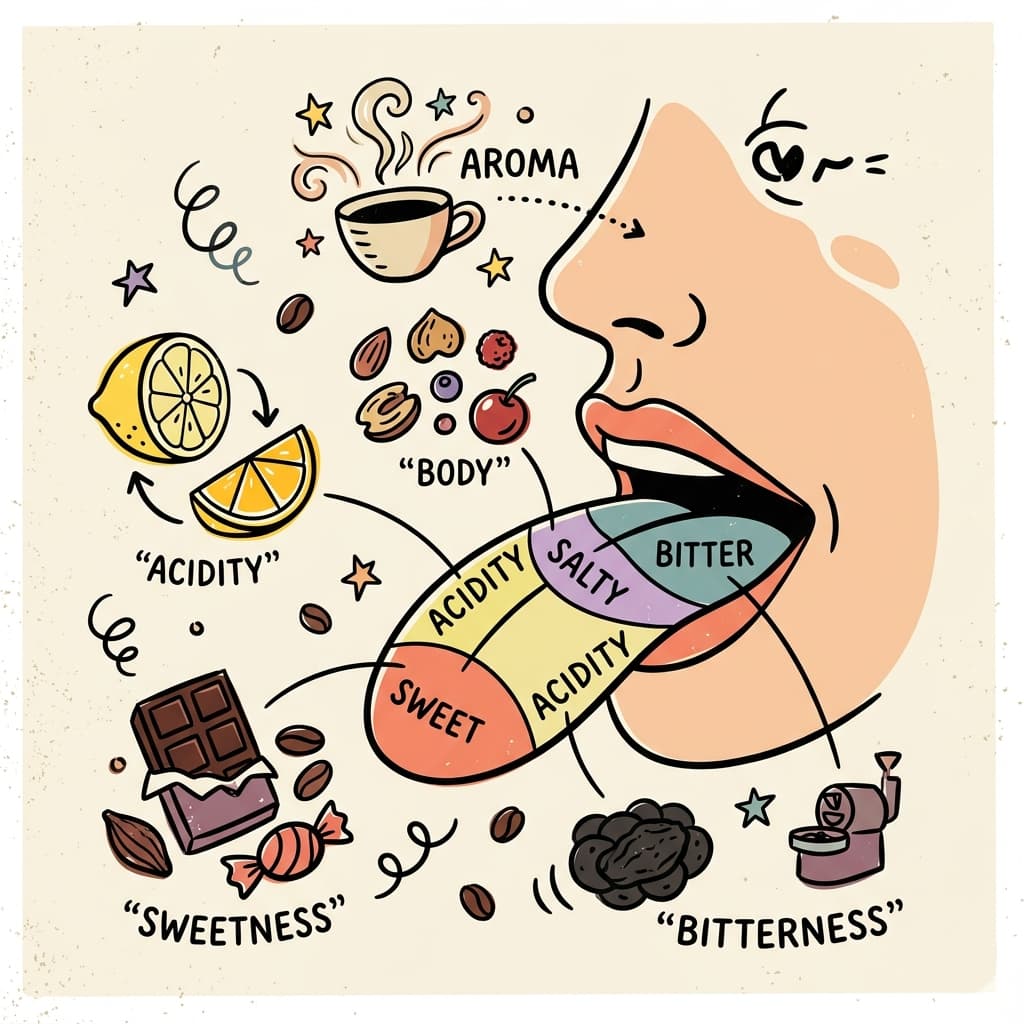
Flavor is not a single sense — it's a symphony. What we call "taste" is actually the convergence of gustatory perception (tongue), olfactory perception (nose), tactile sensation (mouthfeel), and even visual and auditory cues. Understanding these systems is the foundation of all sensory analysis.
The Five Basic Tastes
Our tongue detects five primary taste modalities. While the old "tongue map" (sweet at the tip, bitter at the back) has been debunked — all taste receptors are distributed across the entire tongue — each modality plays a distinct role in how we perceive coffee.
The five taste modalities:
- Sweet — Detected by T1R2/T1R3 receptors. In coffee: caramel, honey, fruit sugars. Indicates good development and ripe cherries.
- Sour/Acid — Detected by ion channels responding to H+ ions. In coffee: citric, malic, tartaric acids. Can be pleasant (brightness) or unpleasant (ferment).
- Bitter — Detected by T2R receptors. In coffee: caffeine, chlorogenic acids, dark roast compounds. Some bitterness is desirable for balance.
- Salt — Detected by ENaC channels. In coffee: rarely positive. Can indicate mineral overload in water or certain defects.
- Umami — Detected by T1R1/T1R3 receptors. In coffee: rare but present in some experimental processes (koji fermentation). Adds depth and savoriness.
The "tongue map" taught in schools for decades is a myth based on a misinterpretation of a 1901 German thesis. All five taste modalities can be detected across the entire tongue surface, though sensitivity varies slightly by region.
Beyond Taste: Retronasal Olfaction
Here's a mind-blowing fact: about 80% of what we call "flavor" is actually smell. When you chew, swallow, or slurp coffee, volatile compounds travel from the back of your mouth up through the nasopharynx to your olfactory epithelium. This is called retronasal olfaction, and it's why pinching your nose makes food taste bland.
This is why professional cuppers slurp aggressively — they're aerating the coffee to maximize retronasal aromatic perception. The louder and more vigorous the slurp, the more volatile compounds reach the olfactory receptors.
To train retronasal perception: take a sip of coffee, hold it in your mouth, and exhale slowly through your nose. You'll notice a dramatic increase in the complexity and specificity of flavors you perceive.