From Cherry to Bean
The Anatomy of a Coffee Cherry
Before we can understand processing, we need to understand what we're processing. A coffee cherry is a small, typically red or yellow fruit about the size of a grape. But the complexity hidden inside this tiny fruit is astonishing.
Layers of a coffee cherry (outside to inside):
- Outer Skin (Exocarp) — The thin, tough outer layer. Turns from green to yellow to red (or sometimes yellow/orange) as it ripens.
- Mucilage (Mesocarp) — A sticky, sweet, honey-like layer directly under the skin. This is the key to honey processing.
- Parchment (Endocarp) — A papery, protective shell around the seed. Removed during hulling before export.
- Silver Skin (Spermoderm) — A very thin, papery layer directly on the bean. Comes off during roasting as "chaff."
- The Bean (Seed) — What we roast and brew! Usually two flat-sided seeds per cherry ("peaberries" are single round seeds).
Coffee is technically the seed of a fruit. The "bean" name is a misnomer — it's not a legume at all. Each cherry typically contains two seeds, which are separated by the processing stage.
Why Processing Matters
Processing is how we separate the seed from the fruit. But it's far more than a mechanical step — it's where a huge part of the coffee's final flavor is determined. The same coffee cherry processed two different ways can taste radically different.
During processing, the sugars in the mucilage can ferment, enzymatic reactions alter the bean's chemistry, and drying speed affects final moisture content. Every decision the producer makes during this stage leaves a flavor fingerprint.
If terroir gives coffee its potential, processing is what decides how much of that potential is realized. A great coffee poorly processed is a tragedy; a humble coffee brilliantly processed can be a revelation.
The Four Main Methods
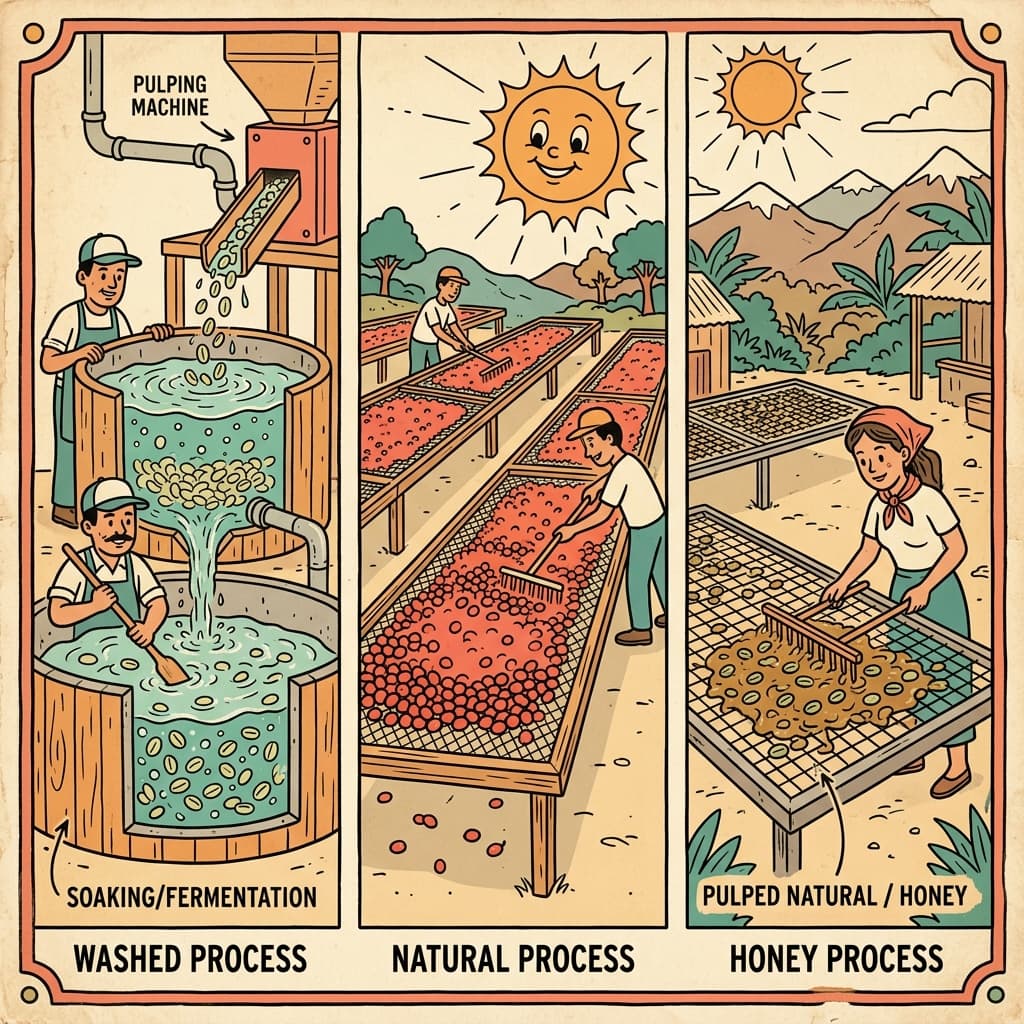
While there are countless variations and experimental approaches, all coffee processing falls into four main families: Washed (Wet), Natural (Dry), Honey (Pulped Natural), and Experimental/Anaerobic. We'll explore each in depth in the coming lessons.
Quick overview of flavor impact:
- Washed — Clean, bright, transparent. Lets the bean's inherent character shine.
- Natural — Fruity, wild, heavy body. The fruit ferments around the bean.
- Honey — Sweet, complex, balanced. A spectrum between washed and natural.
- Experimental — Anything goes. Controlled fermentation for wild, unique flavors.