Washed Processing Deep Dive
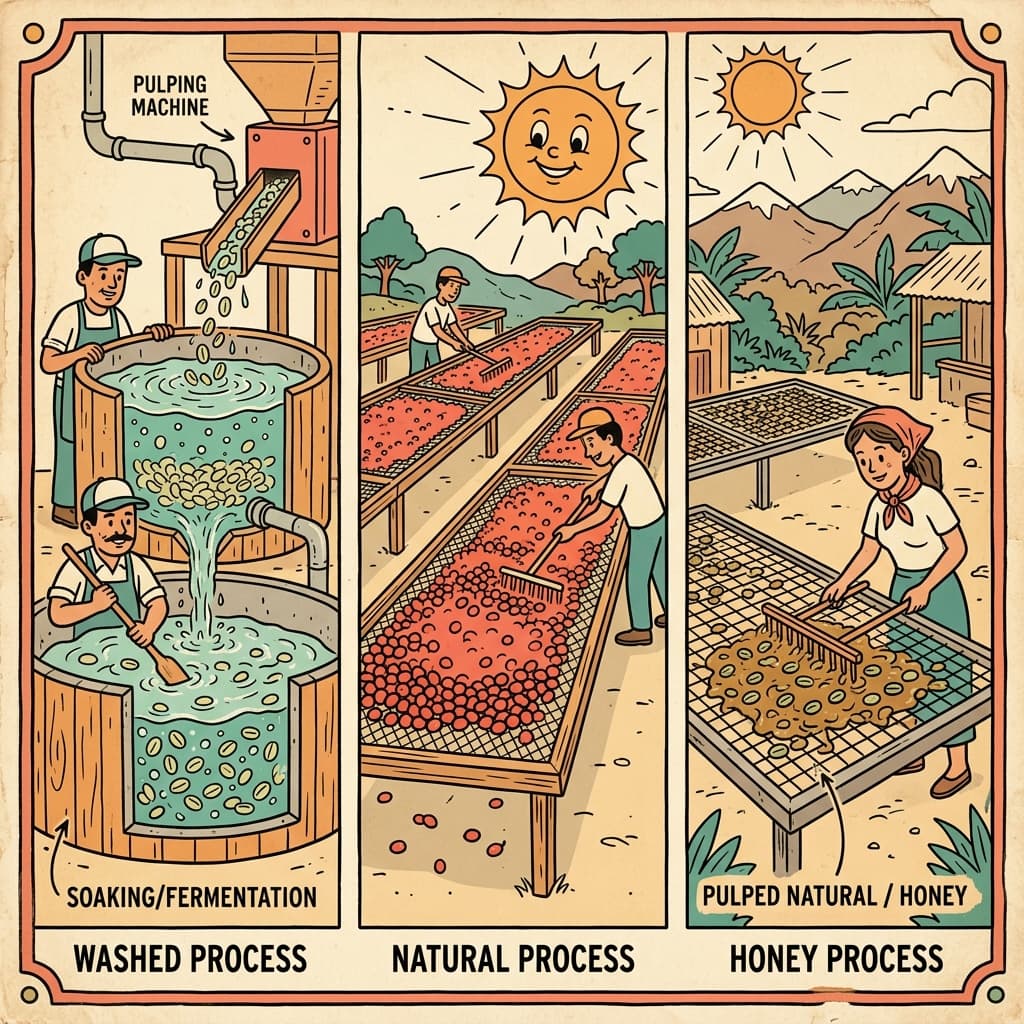
The Gold Standard of Clarity
Washed processing — also called wet processing — is the most widely used method in specialty coffee. It produces clean, bright, and transparent cups that allow you to taste the bean's true character: its origin, variety, and terroir.
Step-by-Step Process
The washed processing workflow:
- 1. Harvest — Only ripe, red cherries are picked (selective picking). This is labor-intensive but critical for quality.
- 2. Depulping — Within 6-12 hours of picking, a machine removes the outer skin and most of the mucilage. Timing is critical.
- 3. Fermentation — Beans sit in tanks of water for 12-72 hours. Naturally occurring microbes break down the remaining mucilage.
- 4. Washing — Beans are agitated in clean water channels. Fully clean beans sink; defects and underdeveloped beans float away.
- 5. Drying — Clean parchment coffee is dried on raised beds or patios to 10-12% moisture content. Takes 7-15 days.
- 6. Resting — Dried parchment rests in warehouses for 30-60 days to stabilize moisture and develop flavor.
- 7. Hulling — The parchment layer is mechanically removed just before export, revealing the green bean.
Fermentation is the most critical and risky phase. Too short, and mucilage remains (causing defects). Too long, and the coffee develops vinegary, over-fermented flavors. Water temperature, ambient temperature, and cherry ripeness all affect timing.
Flavor Profile
Washed coffees are prized for their clarity and precision. Because the fruit is removed before drying, you taste primarily the bean itself — its varietal character and the influence of soil, altitude, and climate.
Typical characteristics of washed coffees:
- Clean, transparent cup — minimal processing influence
- Bright, defined acidity — often described as sparkling or crisp
- Light to medium body — compared to naturals
- Floral and citrus notes are common — especially in African washed coffees
- Consistent quality — less variation between batches
Washed processing requires abundant clean water — approximately 15-20 liters per kilogram of green coffee. This is why water conservation and wastewater treatment are critical sustainability issues in coffee-producing regions.
Where It's Used
Washed processing is the dominant method in Central America (Guatemala, Costa Rica, Colombia), East Africa (Ethiopia's Yirgacheffe region, Kenya, Rwanda), and most of South America. It requires access to clean water and infrastructure, making it more common in established producing regions.